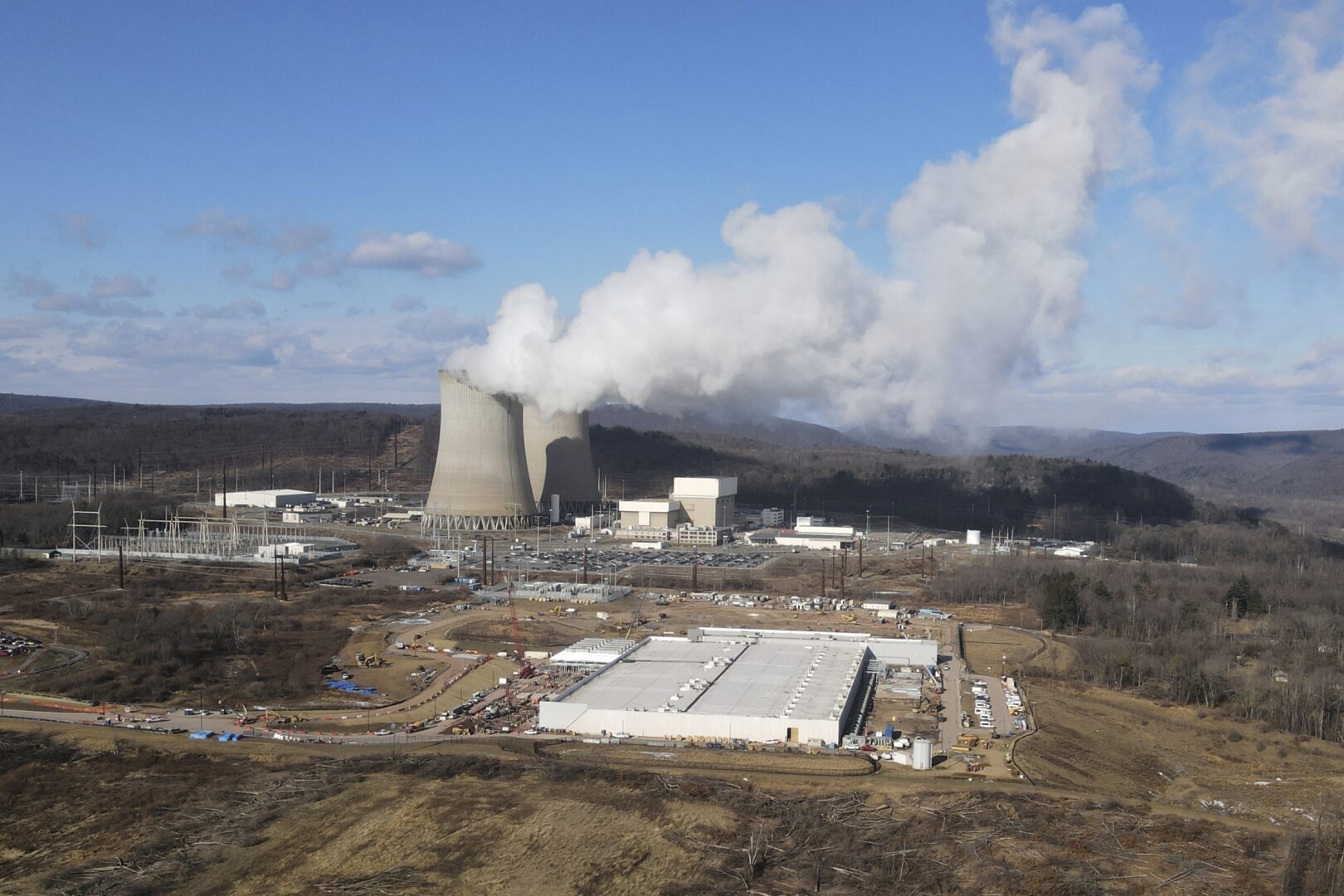
A data center owned by Amazon Web Services, front right, is under construction next to the Susquehanna nuclear power plant in Berwick, Pa., on Jan. 14, 2024. (AP Photo/Ted Shaffrey)

A data center owned by Amazon Web Services, front right, is under construction next to the Susquehanna nuclear power plant in Berwick, Pa., on Jan. 14, 2024. (AP Photo/Ted Shaffrey)
A data center owned by Amazon Web Services, front right, is under construction next to the Susquehanna nuclear power plant in Berwick, Pa., on Jan. 14, 2024. (AP Photo/Ted Shaffrey)
aired; October 13, 2026
Pennsylvania is becoming an attractive location for artificial intelligence data centers, but the facilities’ growing demand for electricity and water is raising questions about their impact on local communities.
Brian R. King, an associate professor of computer science at Bucknell University, says data centers house the powerful computers used to train and operate AI models. Those computers rely on graphics processing units, or GPUs, that require substantial amounts of electricity.
King says Pennsylvania’s energy resources and location near major East Coast cities make it appealing to companies developing these facilities. But he also says the rapid expansion of AI is contributing to growing energy demand.
“It’s not just a computer science disruption,” King said. “This is something that is disrupting every field, every domain out there.”
The impact extends beyond electricity. Dr. Benjamin Hayes, program director of Watershed Sciences and Engineering, says many large data centers use water to cool their equipment. Their overall footprint can also include water used to generate electricity, new infrastructure, pressure on public water supplies and the conversion of farmland to industrial development.
Hayes says the effects can reach beyond the companies building the facilities, potentially affecting neighbors and taxpayers through electricity costs and the availability of public water.
He argues that communities need to consider how multiple projects could affect the same watershed or power supply, rather than evaluating each proposal in isolation.
“We don’t have one clearinghouse for how a data center project is reviewed,” Hayes said, calling for statewide or regional analysis that accounts for electricity and water demand, drought conditions, land use and the needs of local communities.
King says another part of the solution could be developing smaller AI models designed for specific tasks, rather than relying exclusively on increasingly large models that require extensive computing resources.
As Pennsylvania weighs the opportunities and challenges of data center development, both researchers say energy use, water availability and local infrastructure are important parts of the conversation.
