
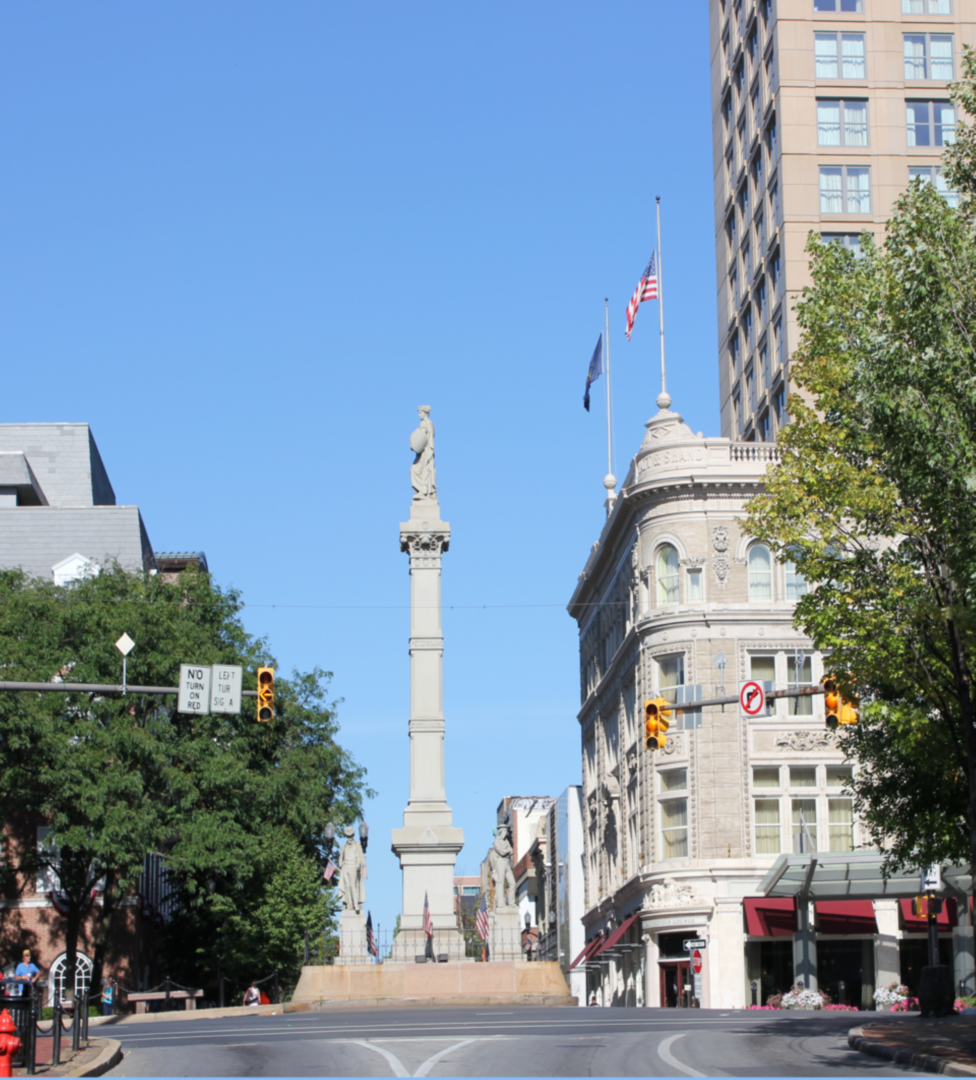
Lancaster was the U.S. capital for one day. Here’s what happened in 1777.
-
Asia Tabb

aired; September 23, 2026
For one day in September 1777, Lancaster was the capital of the United States.
It happened during the American Revolution, as British forces moved toward Philadelphia. Congress knew they needed to leave the city, and Lancaster was chosen as a temporary stopping point before Congress continued on to York.
Christina McSherry, a historian who has researched Lancaster’s role in the Revolution, says the city was more than just a convenient place to stop. Lancaster was the largest inland city at the time and had the infrastructure, courthouse and supplies needed to accommodate Congress.
“They knew we would have places for them to stay,” McSherry said. “We would have a courthouse for them, to meet at. We were also a market town.”
On September 27, 1777, Congress met in Lancaster’s courthouse and handled several pieces of business, including correspondence and authorizations for spending on the Continental Army. But with British forces still too close, Congress moved on to York after just one day.
The story also includes a famous piece of American history. The Liberty Bell was transported out of Philadelphia with Congress, but its wagon broke down in Allentown. The bell was eventually hidden in a church there until it was safe to return to Philadelphia.
Now, Lancaster is embracing that unusual chapter of its history with its first annual Lancaster Capital Day Street Festival on September 26.
Tim Austin, chair of the event’s planning committee, says the celebration is meant to be both historically grounded and fun.
“It’s rooted in real history but it’s also maybe open-ended enough that it invites everyone to get involved, have fun with it,” Austin said. “We don’t take ourselves too seriously here. Like, we were Capital for one day, right?”
McSherry says the event also offers a chance to look beyond the familiar version of Lancaster’s past and understand how diverse and lively the city was in the 18th century.
And there is one more fascinating “what if.” After the Revolution, Lancaster actually made a case to become the permanent U.S. capital. Edward Hand, then Lancaster’s burgess, wrote to Congress describing the city’s infrastructure, businesses and resources. McSherry says the letter makes it possible to imagine how different Lancaster might have been if Congress had stayed longer.
Listen to the podcast to hear the full conversation.