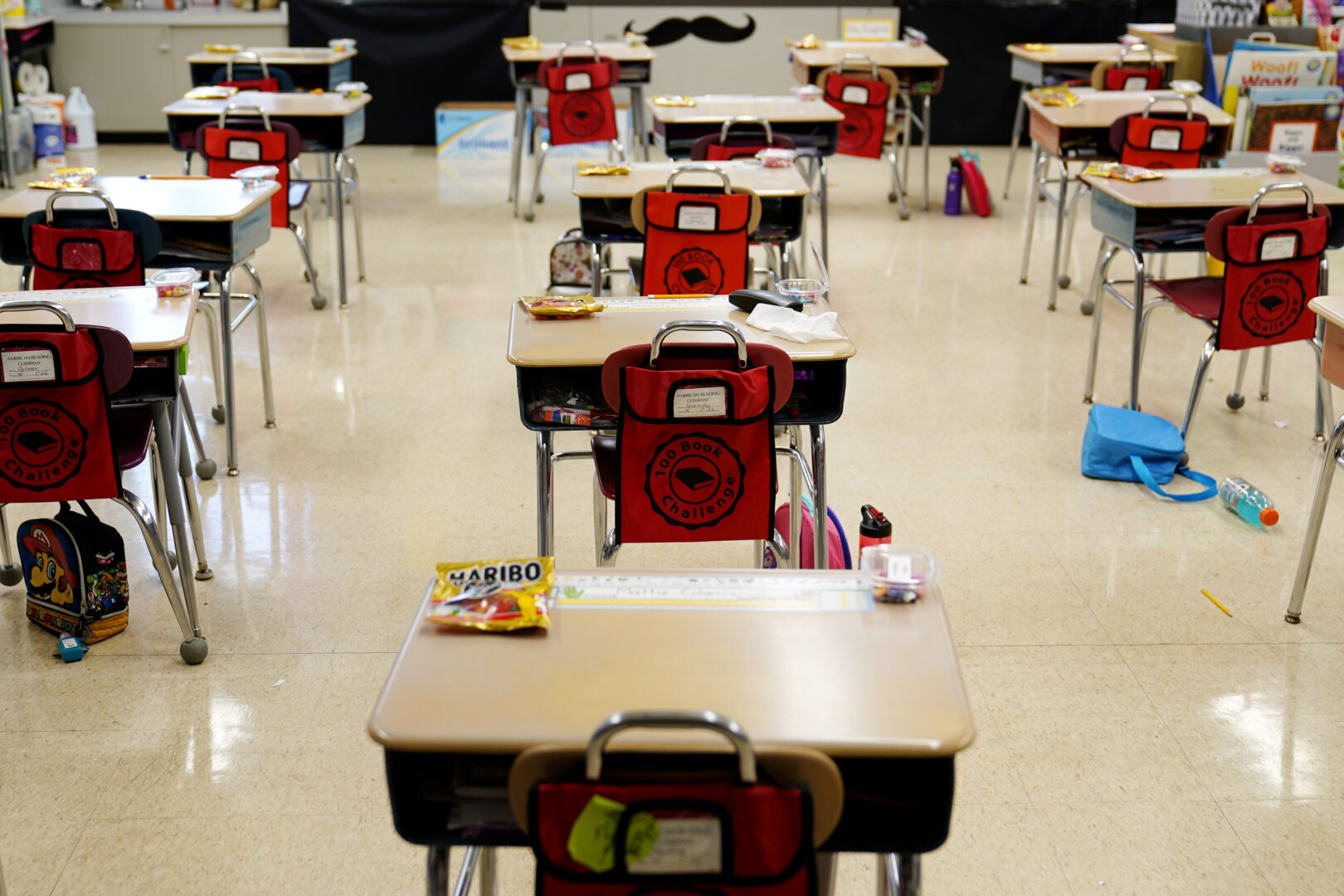
Desks are arranged in a classroom at an elementary school in Nesquehoning, Pa., March 11, 2021.
Matt Slocum / AP Photo

Desks are arranged in a classroom at an elementary school in Nesquehoning, Pa., March 11, 2021.
Matt Slocum / AP Photo
Matt Slocum / AP Photo
Desks are arranged in a classroom at an elementary school in Nesquehoning, Pa., March 11, 2021.
The School District of Lancaster County had to open six new classrooms this year because the special education student population increased again.
That means additional expenses included six teachers, about 18 paraprofessionals, higher transportation costs, and more speech, language, occupational and physical therapy. Five years ago, the special education population was about 18%. This year, it’s 23%. The district’s student population is over 10,000.
Charles Hample, School District of Lancaster’s director of special education, said the state’s additional funding of about $430,000 from the state budget passed this summer “doesn’t even come close to matching” the district’s additional expenses.
The Lancaster school district isn’t alone. Special education costs across Pennsylvania are rising, while state funding hasn’t kept up. As a result, districts across the commonwealth are relying on increasing property taxes to cover the gap. The School District of Lancaster, for example, levied a 4.7% tax increase for the 2026-27 year.
Since the 2009-10 school year, special education expenses have increased by 104% while state and federal special education funding only rose by 21% in that time, according to the Pennsylvania School Board Association’s 2026 State of Education report.
Districts across the country are facing similar pressures as diagnoses increase, student needs become more complex and transportation costs rise.
Bill August, Shippensburg Area School District’s superintendent, said his district’s special education costs have almost doubled since the 2019-20 school year, rising from $8 million to nearly $15 million in seven years.
The district’s special education population grew from 604 students in 2019-20 to over 800 this year, August said. That’s a rise from 19% to about 23% of the student population
“When we have more students, you have special education students or students that need services, that means more staff, and so it all contributes to our budget kind of ballooning in this area,” August said.
Shippensburg Area School District’s board approved a 4.7% tax increase for the 2026-27 school year. The approved budget also includes funding to contract with a speech therapist because the district’s caseload exceeds state numbers.
This isn’t atypical, according to August, and it made financial sense to pay for a contractor at $100 per hour rather than hire a full-time staff member.
The increased state funding is “a step in the right direction,” August said, but districts need more help. Shippensburg received about $200,000 in additional special education money in this year’s budget.
“Either the requirements need to be adjusted or funding from the state needs to match the same arc of growth in amount that is required to be spent,” he said.
Back in Lancaster County, Hample said his district is also seeing an increase in its special education population and associated costs.
He said additional help should come from the federal government.
The federal Individuals with Disabilities Education Act was originally passed in 1975 as the Education for All Handicapped Children Act. It stated that federal funding should make up 40% of the average per-pupil expenditure in public schools. The total federal funding represented around 15% in 2021, according to the American Speech-Language-Hearing Association, but it varies by district.
“No school district in America has even come close to that 40% promise,” Hample said. “We currently receive around 5% of that 40% promise.”

Member support provides the foundation we rely on to connect our community with trusted journalism. Support WITF’s Fall Membership Campaign today.
