
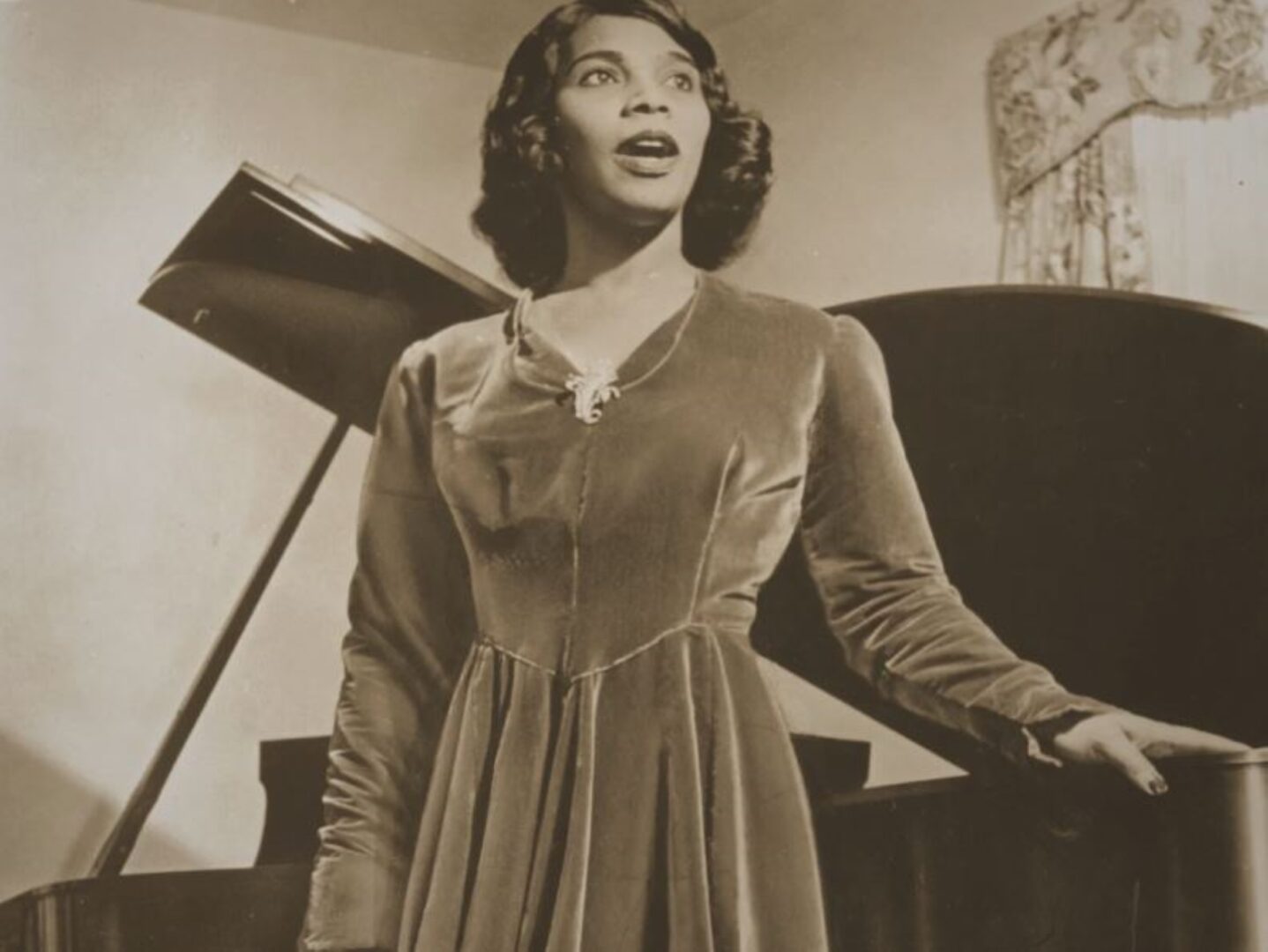
New Book Highlights Pa classical musical icon Marian Anderson’s Legacy
-
Asia Tabb

AIRED; March 18, 2026
Listen tot he podcast to hear the full conversation.
Long before she became a global icon, Marian Anderson was a young girl growing up in Philadelphia, discovering her voice in church.
That voice—and the barriers she broke—are at the center of a new book by Anthony Tommasini, who joined The Spark with Asia Tabb to discuss Voice of a Century: The Life and Artistry of Marian Anderson.
“She was born in 1897 in Philadelphia… her parents were very, very humble,” Tommasini said. “The choir director realized at six years old that she had this voice and drafted her right into the choir.”
From those early beginnings, Anderson’s rise was anything but typical. As a Black classical singer in the early 20th century, opportunities in the United States were limited. Still, she pushed forward, eventually studying abroad and gaining recognition in Europe before returning home as an international star.
“She essentially returned here in 1935 and she was famous,” Tommasini said. “But yet all sorts of doors were closed to her in the United States due to segregation.”
One of the most defining moments of Anderson’s career came in 1939, when she was denied the opportunity to perform at Constitution Hall in Washington, D.C. because of her race. The rejection sparked national attention and led to a historic alternative.
“She should sing on the steps of the Lincoln Memorial,” Tommasini said. “Seventy-five thousand people showed up… Black and white, all mingling together.”
The Easter Sunday performance became a landmark moment in American history, though the contradictions of segregation remained stark. Even after that triumph, Anderson and her family were denied hotel accommodations in the nation’s capital.
“Her career was… this very unfortunately American story of triumph at the same time that she is struggling,” he said.
Despite those challenges, Anderson’s artistry spoke volumes. A contralto with an unusually wide range, she was known for both technical excellence and emotional depth.
“There’s just something about the expressivity, the authenticity… that really make her performances stand out,” Tommasini said.
While Anderson often described herself as not being outspoken, Tommasini said her actions told a different story. During a tour in the Soviet Union, she was instructed not to perform religious music—a staple of her repertoire.
“She just quietly nodded… then she went on stage and sang what she wanted,” he said. “That was her protest.”
Her influence extended far beyond individual performances. In 1955, Anderson broke another major barrier when she became the first Black singer to perform a lead role at Metropolitan Opera.
“If we are going to break this barrier, everybody admires Marian Anderson,” Tommasini said.
That moment helped pave the way for future generations, including opera legend Leontyne Price, who would go on to debut at the Met just a few years later.
Anderson’s life and legacy are what drew Tommasini to the project—though he says the opportunity came unexpectedly. The book was commissioned by Henry Louis Gates Jr. after he read Tommasini’s writing on Anderson’s recordings.
“He contacted me… would I write this book,” Tommasini said. “I was honored and humbled to accept.”
For Tommasini, the goal was not only to document Anderson’s life, but to examine her artistry and lasting impact.
“She was a pioneering figure and yet a great, great artist,” he said.
Today, Anderson remains a symbol of excellence, resilience, and quiet determination—an artist who changed the course of American music history not just through protest, but through performance.