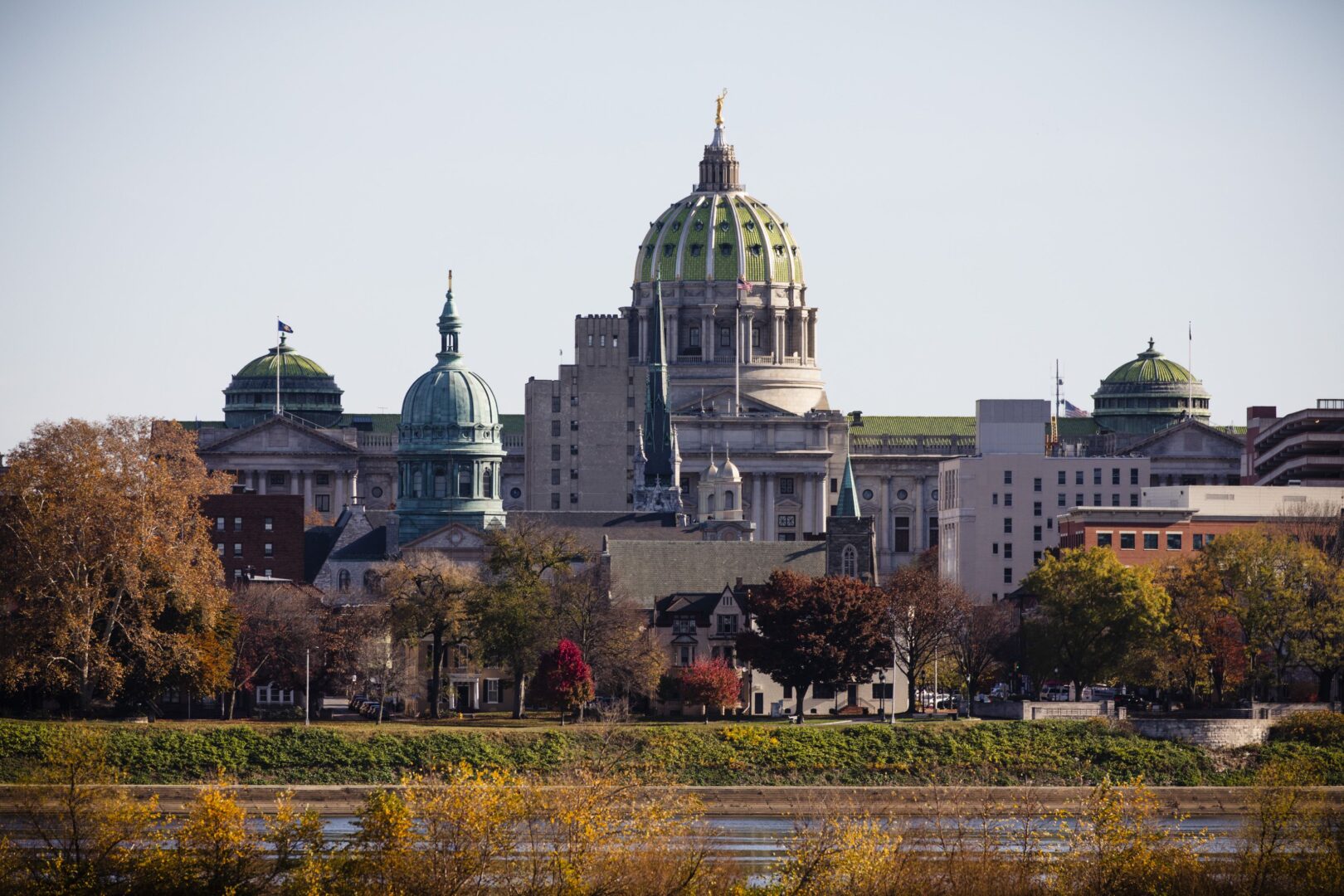
Pennsylvania Capitol in Harrisburg
Amanda Berg / For Spotlight PA

Pennsylvania Capitol in Harrisburg
Amanda Berg / For Spotlight PA
Amanda Berg / For Spotlight PA
Pennsylvania Capitol in Harrisburg
AIRED; September 10, 2025
Listen to the podcast to hear the full conversation.
As downtown Harrisburg continues to evolve, local planning experts see both challenges and opportunities in shaping the city’s future. Vern McKissick, a 30-year member of the Harrisburg Planning Commission who helped develop the city’s first Comprehensive Development Plan since the 1970s, reflects on how the energy around downtown projects has shifted over the decades.
“Thirty years ago, there was an energy and a vision that tomorrow could be better than today,” McKissick said. “We don’t see that as much anymore. The types of projects coming in since 2006 to 2008 have really diminished in size, and with changes like the 2014 recovery budget, it’s hindered developers from fully visualizing projects in older buildings downtown.”
McKissick emphasized that the city once had a palpable excitement for projects like the Civil War Museum, the Hilton, and the ballpark on City Island. “It was always something you wanted to open the newspaper and see what was coming next,” he recalled. “Even after 2000, there was new construction happening downtown, like the establishment of Harrisburg University. But that momentum slowed after 2008.”
Architect Chris Dawson, who has worked on numerous downtown projects for the past 15 years, sees potential to reignite Harrisburg’s downtown vibrancy. “This is the most beautiful capital I’ve seen, bar none,” he said. “The Capitol Complex, the Susquehanna River — these are rare assets. There’s tremendous potential if we can navigate the hurdles and leverage what we already have.”
Dawson highlighted recent successes, including the renovation of the historic Lowengard Building, which now houses offices and residential units. “There are many great buildings and developers downtown, but we need to celebrate and enhance the positives,” he said. “City Island, the Riverfront Park, beautiful streetscapes — these are assets we can make even more desirable.”
Looking ahead, both experts shared their hopes for the next five years. McKissick stressed the need for flexibility in development, particularly around downtown parking. “We’re competing with Manhattan-level parking costs, which is a huge barrier for developers,” he said.
Dawson echoed the sentiment and added a broader vision. “We need to be self-aware as a community, address the negatives, and maximize the impact of our assets,” he said. “Supporting the right advocates and initiatives will make downtown Harrisburg a destination for everyone.”
